
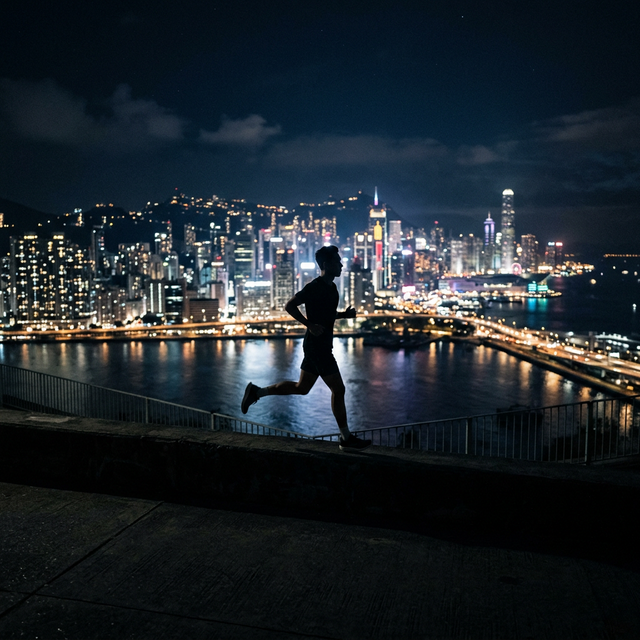
The Art of the Stealth Run
There's a version of your city that almost nobody sees.
It exists between 5:00 and 6:30 in the morning — before the coffee shops open, before the commuters flood the streets, before the noise of the day takes hold. If you've ever laced up in the dark and stepped outside before sunrise, you know exactly what we're talking about.
The stealth run isn't about distance or pace. It's about something harder to measure.
Why the Early Hours Work
The science is straightforward: cortisol peaks in the morning, priming your body for physical output. But the deeper benefit is psychological. Running before the world expects anything of you creates a mental separation that's hard to replicate at any other time of day.
You have no emails. No notifications. No decisions to make. Just the pavement and your breathing.
Studies on pre-breakfast exercise consistently show improvements in fat oxidation, but runners who log early sessions report something less quantifiable — a clarity that carries through the entire day. Decisions feel easier. Creativity improves. The low-grade anxiety that often settles in by mid-morning simply doesn't appear.
The Gear Matters More Than You Think
Running in the dark means your kit has to work harder. Reflective elements aren't optional — they're the difference between a clean run and a dangerous one. Our Ultralight Tee incorporates micro-reflective threading that's invisible in daylight but catches headlights at 200 meters.
Temperature management is the other variable. Pre-dawn air can be 8–10 degrees cooler than your afternoon run, but you'll warm up within the first kilometer. The mistake most runners make is overdressing. A single breathable layer, close-fitting and moisture-wicking, is almost always the right answer.
Building the Habit
The biggest obstacle isn't the alarm. It's the transition from horizontal to vertical.
Lay your kit out the night before — shoes, socks, everything — so the decision is already made. Set your alarm across the room. Commit to a first step, not a full run: just get outside. Nine times out of ten, once you're moving, the run happens naturally.
Start with 20 minutes. The distance is irrelevant. After two weeks, your body will begin waking naturally before the alarm. After a month, the run will feel less like discipline and more like the thing that makes everything else possible.
The City at 5am
There's a particular kind of quiet that belongs to early morning streets. The light is different — softer, cooler, full of long shadows. Other runners you pass share a nod that means something. You've both opted in to something the rest of the city is sleeping through.
The stealth run is, ultimately, a small act of ownership over your day. You did something before most people opened their eyes. Whatever else happens from that point forward, that's already done.
Set the alarm.